
How to Move Heavy Furniture Safely
How to Move Heavy Furniture Safely: Tips & Safe Techniques
Every moving day has that one moment. You’re halfway through shifting the wardrobe, your grip is slipping, and you suddenly remember you have a 9 AM meeting tomorrow that requires a functioning spine. Most furniture injuries don’t happen because people are weak. They happen because nobody stopped for five minutes to think before lifting.
This guide walks through how to move heavy furniture safely, the tools worth buying (or renting), the lifting method that actually protects your back, and the mistakes that turn a Saturday shift into a physiotherapy appointment. No gym-bro advice, no filler, just what works.
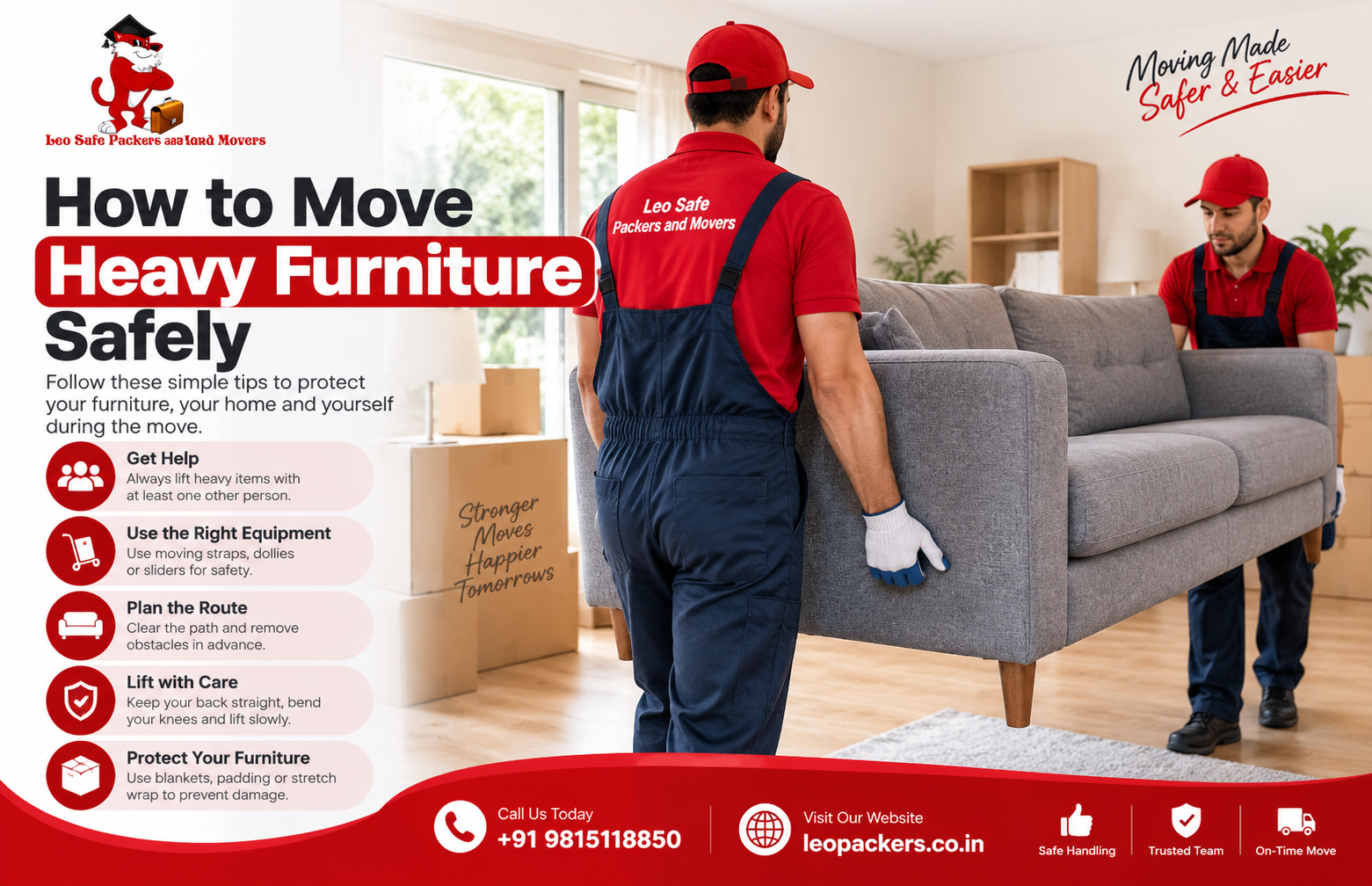
Why Bother With “Safe” Furniture Moving?
Back injuries are among the most common household accidents, and moving heavy items is a repeat offender. Occupational safety research points to one habit as the biggest culprit: bending at the waist instead of the knees while lifting. It sounds small. It isn’t. That single mistake is responsible for a large share of avoidable back strain every year.
There’s a second cost too, and it’s the one nobody mentions until they see it: damaged furniture and scratched floors. A dented wall or a cracked cabinet door costs real money to fix. So getting this right protects two things at once, your body and your stuff.
Plan the Move Before You Lift Anything
Good movers plan first, lift second. Skip this, and you’ll discover the sofa doesn’t clear the doorway only after it’s wedged at an awkward angle in the hallway.
- Measure your bulkiest pieces against doorways, hallways, and staircase widths.
- Spot tight turns early, and decide if a door needs to come off its hinges.
- Clear the path completely. Loose rugs and stray shoes cause more falls than heavy furniture does.
- Work out how many people the job needs. Two is the safe minimum for anything past a dining chair.
A five-minute walkthrough beats an hour of frustration later. It’s basic logic, but moving day always feels rushed, so this step is the first one people skip.
Get the Right Tools First
You don’t need a bodybuilder’s frame for this. You need decent equipment. Most reputable moving guides, from U-Haul to Home Depot, point to the same short list:
- Furniture sliders – felt pads for hardwood, plastic for carpet, so you push instead of lift.
- Dollies or hand trucks – built for dressers, fridges, and washing machines.
- Lifting straps – these shift the weight onto your shoulders and legs, away from your lower back.
- Moving blankets and stretch wrap – keep furniture edges and upholstery from getting scratched.
- Non-slip gloves – a firm grip stops sudden drops mid-lift.
- Cardboard or an old rug – slide this under legs on hard floors for a smoother glide.
None of this is expensive, and most of it can be rented for a day. Skipping tools to save time almost always backfires, usually somewhere around the third stair.
Take Furniture Apart Wherever You Can
A disassembled piece is lighter, easier to carry, and far less likely to clip a wall on the way out.
- Beds – separate the headboard, footboard, and side rails.
- Dressers – pull out the drawers and detach any mirror before lifting.
- Tables and desks – unscrew legs that are bolted on.
- Bookshelves – remove adjustable shelves and pack them on their own.
Keep every screw and bolt in a labelled bag. Future you, staring at a pile of unmarked hardware at 11 PM, will genuinely thank present you for this.
The Lifting Technique That Actually Works
This is the part everyone assumes they already know, right up until they prove otherwise. Workplace safety guidance keeps coming back to the same sequence, and for good reason, it works:
- Stand close to the load. The farther it sits from your body, the more strain your spine takes on.
- Bend at the knees and hips, not the waist. Keep your back straight, not curved.
- Get a full, firm grip. Fingertips aren’t a grip.
- Tighten your core, then lift by straightening your legs, not by yanking with your back.
- Keep the load close as you carry it.
- Turn with your feet, never your torso. Twisting under load is one of the fastest ways to hurt a disc.
- Set it down slowly, reversing the same steps.
If something feels too heavy to lift smoothly, it is too heavy. There’s an old safety-trainer line that sums this up well: if you can’t lift it slow, you can’t lift it safe.
For tall pieces like a wardrobe, the two-person “high-low” method helps a lot, one person supports the top, the other the bottom, and the whole thing tilts to match the stairs or a tight turn.
Push Instead of Pulling, Whenever You Can
Physics is genuinely on your side here. Pushing lets you use your body weight and leg strength together. Pulling twists your spine into an awkward angle instead. Wherever the floor allows it, load the piece onto a dolly or slider and push it forward, facing the direction you’re walking.
Protect Floors, Walls, and Doorways
A careful move can still leave scuff marks if this step gets skipped.
- Lay rosin paper on hardwood and a protective film on carpet along the path.
- Pad sharp wall corners and door frames with cardboard or a spare moving blanket.
- Use painter’s tape, not regular tape, since regular tape takes the paint off with it.
Ten extra minutes here saves an awkward conversation with your landlord later.
Stairs and Tight Corners Deserve Extra Care
Stairs are where most furniture accidents happen, mostly because gravity stops cooperating. A few rules that hold up in practice:
- Keep the heavier end lower, controlled by the stronger person.
- Take it one step at a time. There’s no prize for speed here.
- Agree on simple commands, “lift,” “hold,” “down slow”, before you start moving.
- Never let someone walk backward down stairs without a clear view or a spotter guiding them.
Mistakes That Cause Injuries or Damage
- Rushing. Most accidents happen on the “just one more trip” attempt.
- Lifting alone. A heavy dresser has no interest in your ego.
- Ignoring pain signals. A twinge mid-lift is your body’s polite warning before an impolite injury.
- Wrong footwear. Flip-flops and heavy furniture were never meant to meet.
- Overpacked drawers. Empty them before lifting; nobody needs extra kilos of winter sweaters riding along.
When It’s Time to Call the Professionals
Some furniture just isn’t a DIY job, safes, pianos, glass cabinets, or anything crossing 100 kilograms. Professional movers bring trained manpower, the right equipment, and insurance in case something does go wrong.
This is where a company like Leo Packers and Movers fits in. Based in Chandigarh and covering the Tricity region along with a Pan India network, the team has handled household and office relocations since 2010. Their furniture shifting service covers dismantling, foam and stretch-film wrapping, careful loading, and reassembly at the new address, essentially every step covered in this guide, done by trained hands instead of a tired back. If you’re relocating a full house, their home shifting service handles the entire process end to end, and for offices, the office relocation team manages furniture, electronics, and documents with minimal downtime.
Need to move a car or bike along with your household goods? Their car and bike transportation service covers that too. And if your new place isn’t ready yet, warehousing and storage keeps your furniture safe in the meantime. For an idea of what a move might cost, or to check if they serve your area across Punjab and beyond, it’s worth a quick look. You can also get in touch directly for a free quote before deciding whether to DIY or hire help.
Furniture Shifting Across Chandigarh Tricity and Nearby Areas
Heavy furniture doesn’t get any lighter just because you’re moving within the same city. Whether it’s a short shift across Chandigarh or a move to a neighbouring town, the same lifting rules, tools, and precautions from this guide still apply.
If you’re anywhere in the Tricity belt, help is close by. Leo Packers and Movers handles furniture shifting in Chandigarh, Mohali, and Panchkula, along with surrounding areas like Zirakpur, Kharar, Derabassi, New Chandigarh, Pinjore, and Kalka. Moving further out? Their network also covers Ludhiana and Baddi.
If you’re within specific Chandigarh sectors, there’s local support too, including Sector 17, Sector 20, Sector 26, Sector 35, and Manimajra. Wherever you’re shifting to within this region, someone trained in safe furniture handling isn’t far away.
Quick Safety Checklist
- Measure doorways and plan the route
- Gather sliders, a dolly, straps, and blankets
- Disassemble what you can
- Lift with your legs, not your back
- Push instead of pulling where possible
- Protect floors, walls, and corners
- Take stairs one careful step at a time
- Call professional movers for oversized or fragile items
Final Thoughts
Moving heavy furniture safely really comes down to three things: preparation, the right tools, and technique. Not brute strength. Respect your back, protect your floors, and know when it’s smarter to bring in help. Your spine, and your furniture, will both thank you for it.